Popis
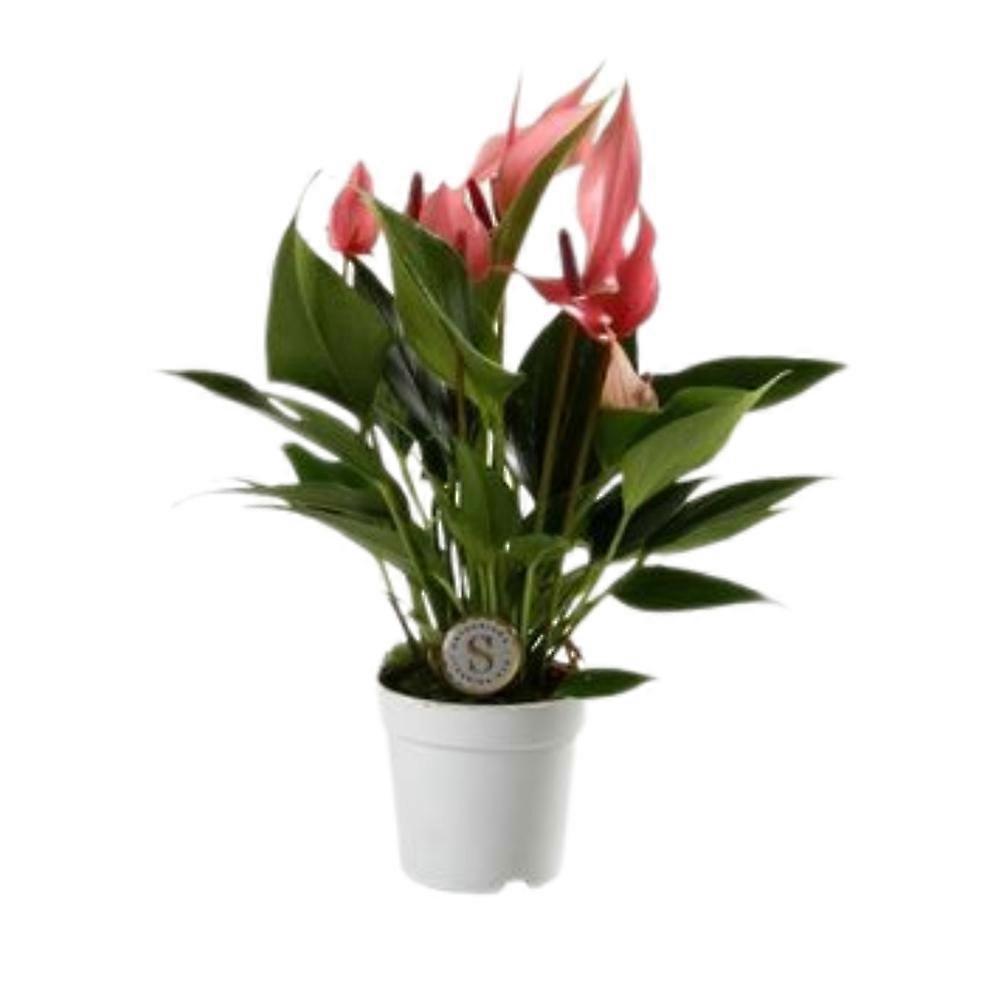
Anthurium 'Red Lilli' Ø7cm
Botanical Origin and History Anthurium 'Red Lilli' is a selected cultivar from the genus Anthurium , part of the large Araceae family - the same family that includes Monstera, Philodendron, and Spathiphyllum. The genus contains over 1000 species native to the humid tropical forests of Central and South America, with a remarkable concentration in Colombia, Ecuador, Costa Rica, and northern Brazil. Commonly known as the Flamingo Flower, Painter's Palette, or Tail Flower, the Anthurium was officially documented by French botanist Édouard André in 1876 in the Andean forests of Colombia. The species that became the foundation for most modern hybrids, including 'Red Lilli', is Anthurium andraeanum , named in honor of André himself. The 'Red Lilli' cultivar was developed by Dutch nurseries specialising in compact Anthuriums intended for small pot sizes. Its distinguishing feature is the spectacular retention of the intensely red spathe colouration even on small pots (D7-D9 cm), where most cultivars produce smaller or less chromatically saturated spathes. The Netherlands remains today the world's leading producer of Anthurium, controlling over 80% of global production for the ornamental plant market. In its natural habitat, plants grow as epiphytes or semi-epiphytes, clinging to the bark of tall trees in the tropical canopy. They benefit from consistently high humidity, light filtered through the foliage above, and stable temperatures between 20 and 28 °C. This origin explains the plant's preferences for bright indirect light, high atmospheric humidity, and an airy, well-drained substrate. In modern horticulture, Anthurium is one of the most appreciated ornamental genera, valued both for cut flowers and as indoor potted plants. The Dutch, Danish, and Costa Rican floral industries produce tens of millions of plants each year for export worldwide, and the 'Red Lilli' cultivar is one of the most sought-after compact varieties for the office plant and gift segment. Features and Appearance Anthurium 'Red Lilli' catches the eye through the powerful contrast between its lacquered red spathes and glossy green foliage. What many people consider a 'flower' is in fact a spathe - a modified leaf, heart-shaped, that protects the true inflorescence. The genuine flowers are tiny, arranged on the central spadix - the yellow-orange cylinder that emerges from the centre of the spathe. This is a typical feature of the Araceae family, also seen in Spathiphyllum, Calla, and Anthurium clarinervium. The leaves are cordate (heart-shaped), deep glossy green with prominent veining. At maturity, leaves can reach 15-20 cm in length in a D7 pot. The plant grows compactly with an upright habit, ideal for small spaces such as desks, shelves, and windowsills. The leaf surface has a waxy, slightly glossy appearance that reflects light and amplifies the sense of tropical freshness. One of the most valuable characteristics of the 'Red Lilli' cultivar is the long-lasting bloom duration. A well-cared-for spathe retains its intense colour for 6-8 weeks, and the plant blooms in successive rounds throughout the year if it receives optimal light and humidity. Under ideal conditions, a mature plant can produce 4-6 spathes per year, each lasting several weeks. The 7 cm pot diameter makes 'Red Lilli' an ideal gift, an office plant, or the perfect complement for arrangements with multiple Anthuriums in different colours (white, pink, salmon, green). The plant's height at delivery is approximately 20-25 cm including the pot, making it perfect for spaces with limited vertical room. Proper Care Guide Light: Anthurium 'Red Lilli' prefers bright indirect light. A spot near an east- or northeast-facing window is ideal. Direct sun, especially in summer, can scorch the leaves and bleach the spathes. Insufficient light leads to a stop in flowering and smaller leaves. In dark rooms, supplement with a cool-spectrum LED grow lamp for 10-12 hours per day. Watering: The substrate should be kept slightly moist but never saturated. Water when the top 2-3 cm of substrate feel dry to the touch. In summer, frequency may be 1-2 times per week; in winter, once every 10-14 days. Stagnant water in the saucer causes root rot - always empty it 15 minutes after watering. Use room-temperature water, ideally filtered or rainwater, to avoid limescale buildup. Humidity: Being a tropical rainforest native, Anthurium loves high humidity, ideally between 60% and 80%. In dry apartments, mist the foliage in the morning with lime-free water, or place the plant on a pebble tray filled with water. A room humidifier is the most efficient long-term investment if you grow several tropical plants. Temperature: The optimal range is 18-25 °C. Avoid temperatures below 15 °C and cold drafts, which can cause yellowing leaves and growth arrest. In summer, keep the plant away from direct air-conditioning flow; in winter, move it away from hot radiators that dry out the air. Fertilisation: From spring
-
Fruugo ID:
515159724-1050959009
-
EAN:
4008330721639